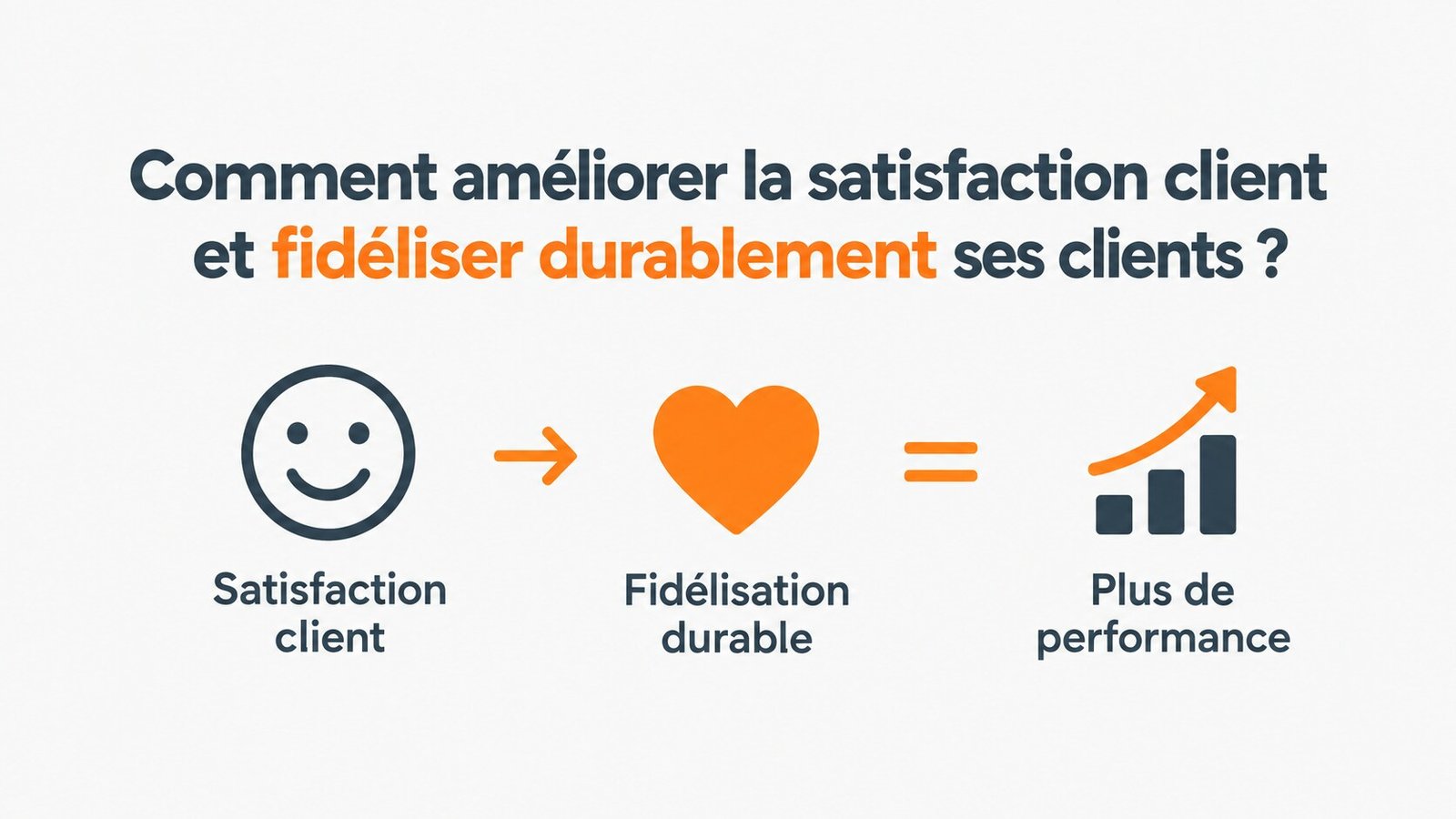
In the automotive sector, customer satisfaction improves sustainably by following a routine rather than launching one-off campaigns. This routine consists of four steps:
- measure experience at key moments;
- understand what creates dissatisfaction;
- act on the causes;
- verify that changes deliver results.
Loyalty follows: a customer who has a good experience at the service department has a concrete reason to come back. Here's how to implement this routine in an automotive dealership, who manages it, at what pace, and with which metrics.
Why satisfaction has become a loyalty issue
In Canada, the number of service department visits is no longer increasing. According to the J.D. Power 2026 study on after-sales service, published on September 10, 2026 (Canada Customer Service Index – Long-Term, 10,262 vehicle owners aged 4 to 12 years), dealership customers make an average of 1.8 visits per year, a stable figure. When visits aren't increasing, growth depends mainly on the ability to retain your customers.
Dealerships have an advantage: 47% of their customers say they chose them because of their past experience with after-sales service. But this advantage is eroding. In one year, satisfaction increased by 13 points at independent workshops and 6 points at chains, compared to just one point at dealerships. Competitors are improving faster.
Knowing what matters most in satisfaction
Before taking action, it's useful to know where to focus your efforts. In the J.D. Power 2026 study, service satisfaction is based on five factors, in order of importance:
- service quality (32%);
- vehicle delivery (20%);
- facilities (17%);
- initial handling (16%);
- service advisor (15%).
Two lessons emerge. First, getting repairs right remains the foundation. Second, vehicle delivery weighs heavily, and it's precisely where dealerships lag the most: 52% of their customers say they picked up their vehicle quickly, compared to 69% at secondary market workshops. For many dealerships, this is a good starting point.
Step 1: Measure experience at key moments
You can't improve what you can't see. The first step is to ask customers for feedback right after the moments that matter, while their memory is still fresh.
Choose three moments to start
There's no need to measure everything from the start. Three moments are enough for most dealerships:
- appointment booking at the service department, measured with CES (customer effort);
- service department visit, measured with CSAT (satisfaction) after vehicle delivery;
- new vehicle delivery, measured with NPS (recommendation) a few days later.
Keep surveys short
A rating and one open-ended question are enough, for example: "What would have made your visit simpler?" Written comments are often worth more than the rating, as they indicate what to fix. Invite all customers, without filtering by presumed satisfaction, so results reflect reality.
Step 2: Understand the causes of dissatisfaction
An average rating shows if there's a problem; comments show which one. Each week, a designated person reads the responses and sorts them by theme: delays, cost transparency, repair explanations, welcome, communication during work, vehicle cleanliness.
After a few weeks, two or three themes stand out: these are your priorities. Add any online reviews, sorted the same way. If they point to the same frustrations as your surveys, your diagnosis is solid.
Fictional example, for illustration: the after-sales director of an Outaouais dealership notices that customers rate the quality of work well, but the word "wait" appears in one comment out of three. Looking closer, they discover the wait happens mainly at vehicle delivery, between 4 p.m. and 6 p.m., when the invoice isn't ready and only one employee is at the counter.
Step 3: Act on causes, not just cases
You need to act on two fronts, and both are necessary.
Recover each dissatisfied customer
Every negative response must trigger a quick callback from someone able to resolve the problem. Set a callback timeframe and stick to it. A customer contacted after a bad experience still has a reason to stay; an ignored customer often leaves without saying anything.
Fix the process that creates the frustration
Each month, choose one or two recurring frustrations, assign a responsible person, and decide on a specific action. In the fictional example above, the action could be to prepare invoices as soon as work ends, send a text when the vehicle is ready, and add a person at the counter at end of day.
Some common action ideas depending on the frustration:
- Invoice surprises: written estimate, photo of the part to be replaced, customer approval before any overage.
- Missed deadlines: realistic pickup time at reception, notice as soon as a delay is known.
- Difficulty booking an appointment: online reservation, callback for missed calls during the day.
- Questions after delivery: explanation of main features, follow-up call in the weeks following.
Step 4: Verify that changes deliver results
An action is successful only if it changes what customers experience. After each change, track two things for a few months: the relevant metric (for example service department CSAT) and the frequency of the theme in comments (for example the word "wait"). If both improve, the change works. If not, you need to revise the action.
For loyalty, add behavioral metrics, which show if customers really come back:
- the share of buyers who return for their first service;
- the service department return rate from year to year;
- the share of dissatisfied customers contacted who come back afterward.
A simple routine for long-term sustainability
It's consistency that makes the difference. Here's a realistic pace for a dealership:
- Every day: call back customers who expressed dissatisfaction and respond to new online reviews.
- Every week: read and categorize received comments.
- Every month: hold a 30-minute review with sales and after-sales managers (results, dominant themes, ongoing actions, next action).
- Every quarter: review completed actions and check the progress of loyalty metrics.
Also share results with advisors and technicians by reading a few customer comments aloud. Teams improve more willingly what they see.
Mistakes that slow down loyalty
Chasing the score. Asking customers for a perfect rating bumps up results without improving experience, and the dealership no longer knows what customers really think.
Measuring without acting. A survey that leads nowhere tires out customers and teams.
Wanting to change everything at once. Better to fix one frustration per month than launch ten projects that never finish.
Forgetting silent customers. Lack of complaints doesn't mean satisfaction. The service department return rate is often more revealing than the number of complaints.
How Monexpe can support this approach
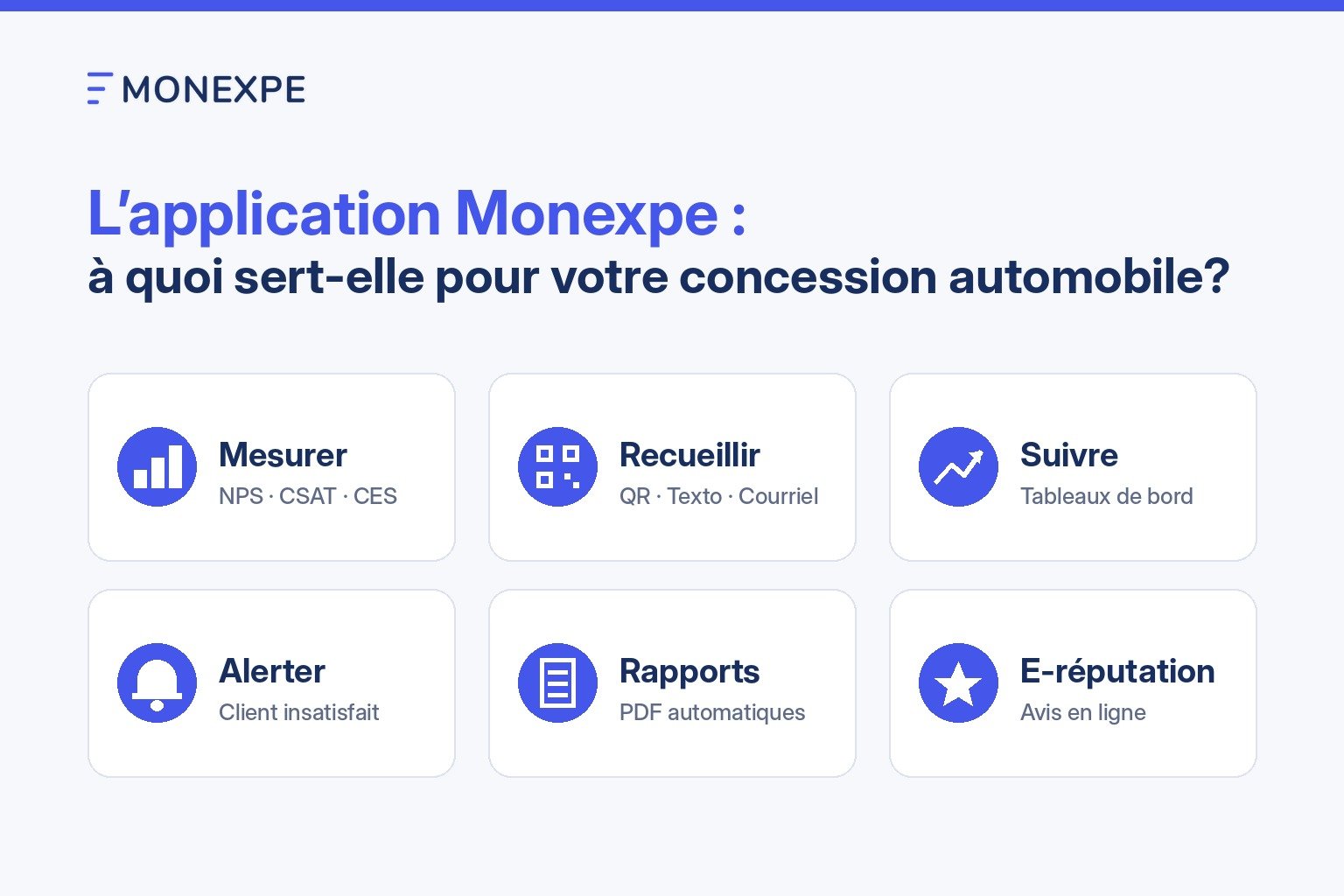
The method described here is based on regular listening and monitoring over time. Monexpe is a customer experience measurement and management platform. It allows you to:
- gather comments;
- measure satisfaction with NPS, CSAT, and CES;
- track results over time;
- better manage your online reputation.
For a dealership, it helps measure key moments, identify dissatisfied customers to call back, and verify month after month whether the actions taken are actually improving the experienced experience.
In summary
In the automotive sector, customer satisfaction doesn't improve overnight: it progresses through a routine sustained over time. Measuring at the right moments, understanding causes, acting on processes, and verifying results: that's how a dealership turns a good service visit into a loyal customer. When visit numbers aren't increasing, this is one of the most concrete growth levers.
Want to implement this routine in your dealership? Discover Monexpe or request a demo.